
The New Cartography of Contemporary Verse
A Critical Reading of Four Voices from the World Poetry Map

To introduce readers to an entirely new poetic universe through Poetrywala, my friend Hemant Divate—poet, editor, publisher, translator, and literary festival visionary from India—unveiled the release of four remarkable new books.
The recent offerings from Poetrywala, under its consistent mission of international literary exchange, are not merely collections of poetry — they are cartographic revelations. Each book navigates between memory and metaphor, time and territory, self and society. Whether from India, Spain, or Croatia, these poets inscribe the world anew, layering history, philosophy, and personal reckonings in tones both urgent and timeless.
In Amlanjyoti Goswami’s A Different Story, poetry becomes an act of gentle restoration — of the soul, the self, the world. His is a voice that resists despair not with grand gestures but with everyday epiphanies: chai cups, tired elephants, cucumbers, and kebabs. There is a quiet magic in how he invites us to leave our sadness “stranded by the light post” and trust in the hope of a solar tomorrow. While invoking epic characters like Krishna, Arjuna, Karna, and Kunti, Goswami does not pontificate; he reflects. His intertextual gestures — nods to Basho, Fellini, and Vinod Kumar Shukla — suggest a global poetic consciousness rooted in local soil.
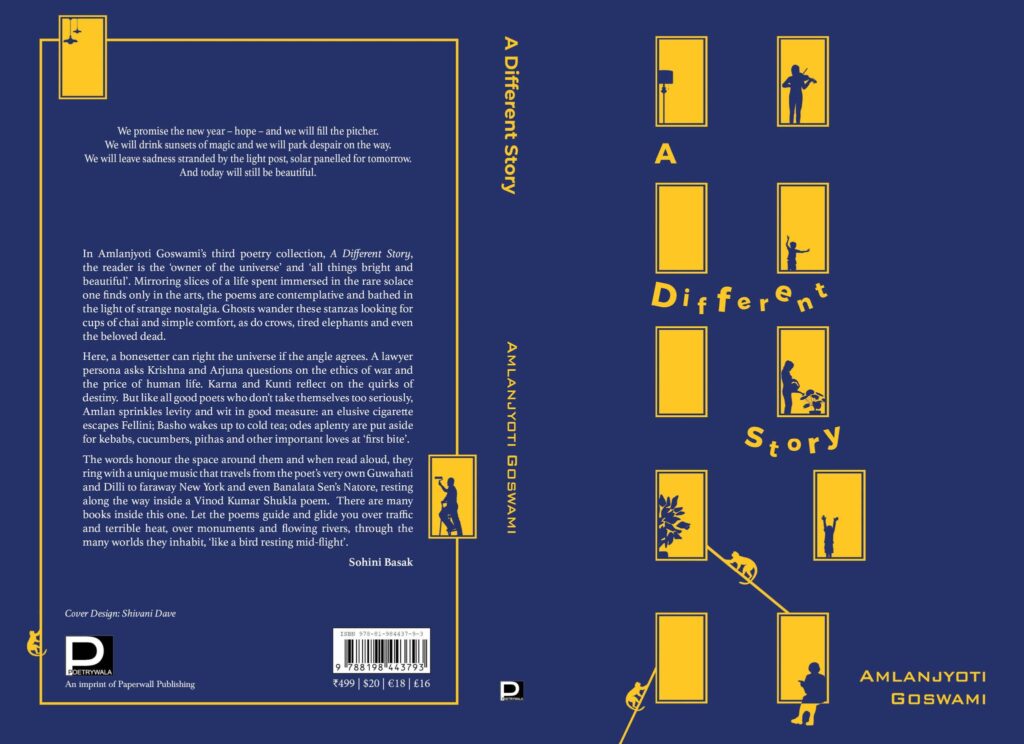 The poet’s cities — Guwahati, Delhi, New York — become points of resonance for a reader equally at home in the personal and the mythic.
If Goswami gently ushers us into optimism, Dion D’Souza’s Cold Renewal is a more fragmented mirror, holding up the shards of memory like sacred relics. There is Proustian intensity in his quest for lost time, but it is filtered through a modernist unease and postmodern dislocation. The water motif — symbolic of purification, fluidity, and loss — threads his poems with both grace and grief.
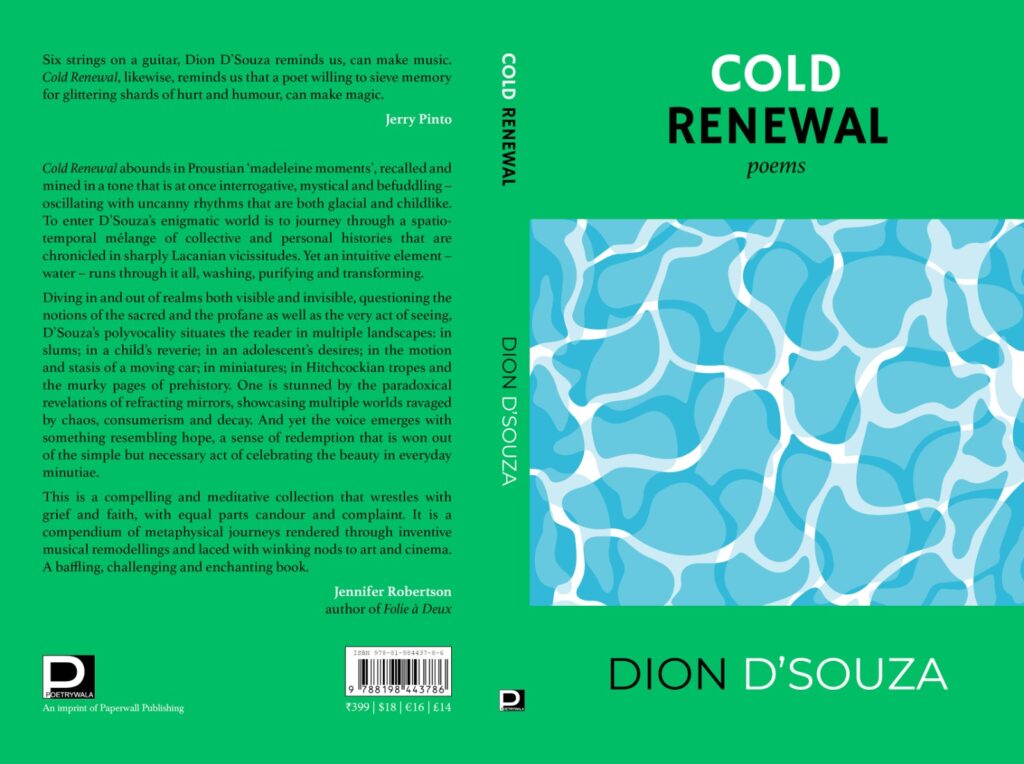 D’Souza oscillates between slums and sacred spaces, between Hitchcockian suspense and childlike wonder. His collection dares to interrogate reality itself — what is real, what is remembered, what is refashioned. And in this interrogation lies the poetry’s redemptive power: a celebration of the minuscule, the mundane, the nearly missed.
Moving further into European terrain, Marko Pogačar’s Midnight Verbs carries the thrum of Croatian and continental memory. Pogačar is not only writing verses — he is conducting a symphony of the historical, the political, and the intimate. Critics compare him to Brodsky, Ashbery, and Šalamun, but he transcends lineage by invoking a metaphysical density unique to his vision.
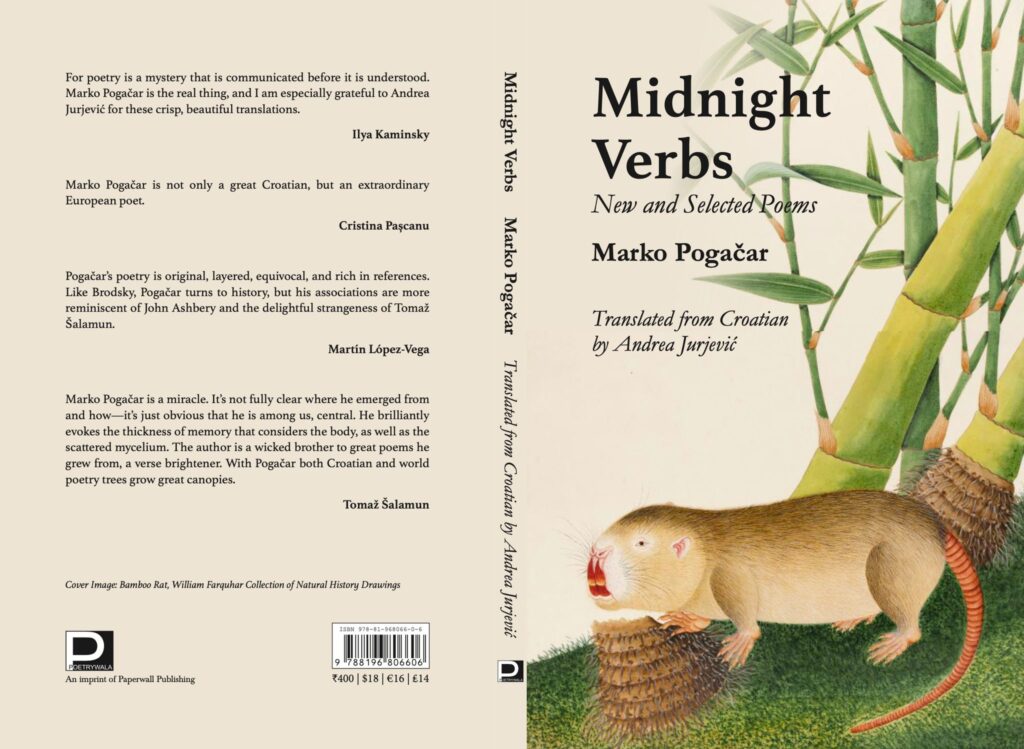 His “verbs” are not just grammatical forms; they are existential actions — thick with memory, lush with layered meanings. The translations by Andrea Jurjević retain the crisp music of the original while allowing the poems to breathe in a new linguistic climate. Pogačar’s poetry stands as both a mirror and a map — reflecting fractured selves and guiding the reader through Europe’s poetic underground.
Finally, Zingonia Zingone’s On the Brink of the Abyss is the collection that most radically defies narrative and embraces the ecstatic. It reads less like a book and more like an incantation. The unity between the spiritual and the earthly is not a thematic pursuit, but a structural embodiment.
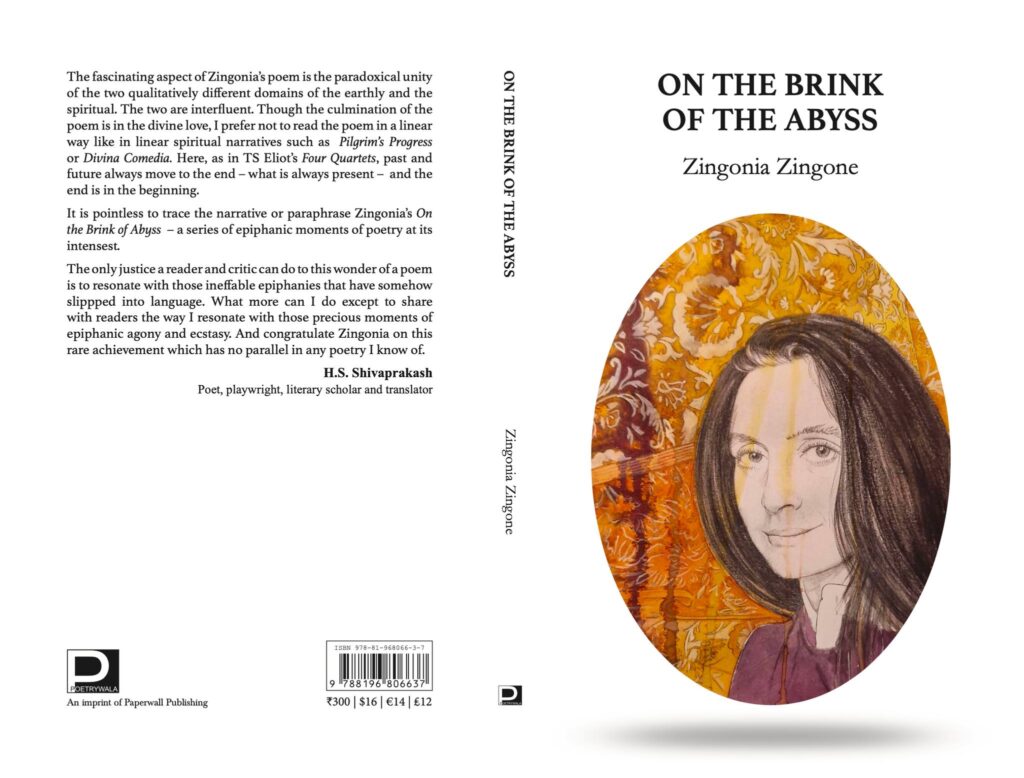 Critics reference The Divine Comedy and Four Quartets, but Zingone refuses a linear pilgrimage. Instead, she plunges the reader into a luminous series of epiphanies — luminous, ineffable, and trembling with intensity. Her poetry asks nothing less than full surrender: not to understanding, but to resonance.
Each of these four collections offers more than lyricism — they offer a way to think about time, memory, history, and healing. Together, they form a new cartography of contemporary verse, crossing continents and consciousnesses. Poetrywala’s curatorial vision, as seen in these books, reminds us that poetry still dares to stitch a fragmented world together — sometimes with wit, sometimes with grief, but always with unwavering commitment to the truth of the moment. Whether you read for beauty, for solace, or for intellectual illumination, these four books are not to be missed.
Ashraf Aboul-Yazid, Cairo