African Literature on Its Way to Paris
A Silk Road Creative Dialogue Brings Together Voices from Africa and Europe
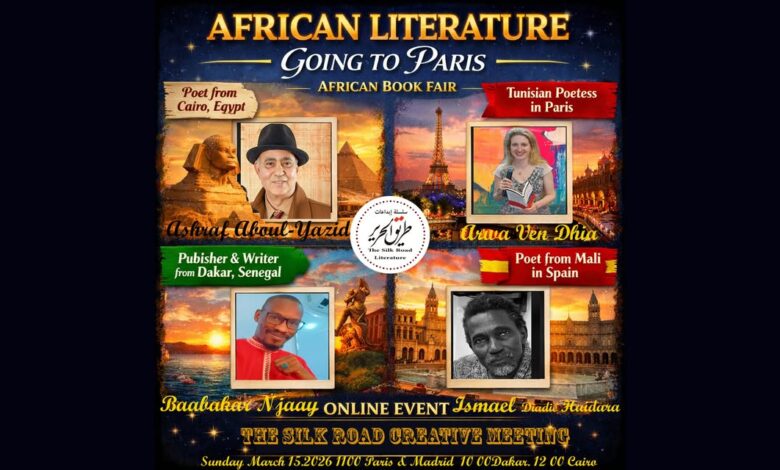
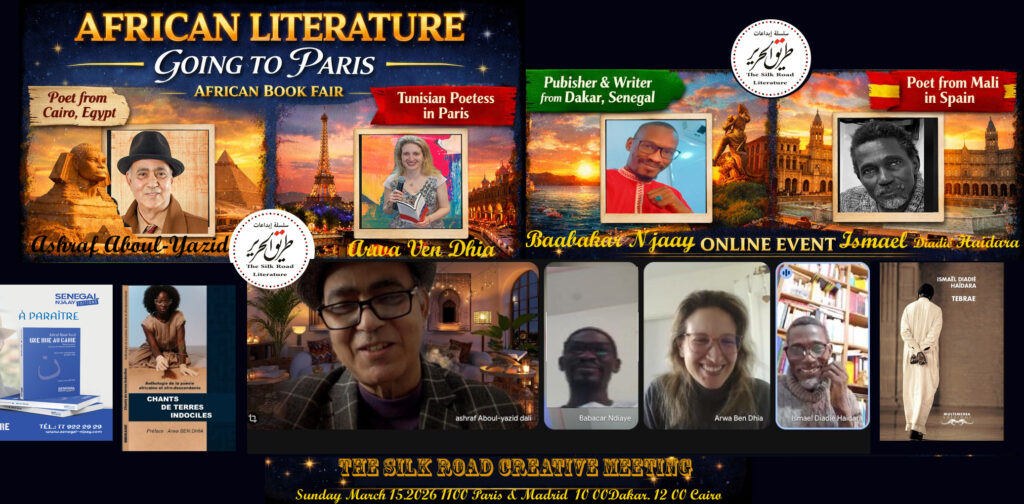 A new online session in the series “Creative Encounters on the Silk Road” was recently held under the title “African Literature at the African Book Fair in Paris 2026.” The event was hosted by Egyptian poet and writer Dr. Ashraf Aboul-Yazid and featured three distinguished guests from Africa and Europe: Tunisian poet and translator Arwa Ben Dhia, based in Paris; Senegalese publisher and writer Babacar Ndiaye; and Malian poet Ismael Diadié Haidara, who lives in Spain.
The discussion explored the growing presence of African and Arab literature at the African Book Fair in Paris (Salon du Livre Africain de Paris – SLAP) and examined the role of translation and publishing in building cultural bridges between continents. Participants also shared insights into their creative and professional experiences, highlighting the importance of international book fairs in expanding the global reach of African literature and strengthening cultural dialogue among Africa, Europe, and the Arab world.
A Platform for Cross-Continental Literary Dialogue
This session forms part of the Silk Road Creative Literary Encounters, a series launched in 2025 to promote cultural exchange among writers, translators, and scholars from diverse literary traditions. Since its inception, the initiative has evolved into a vibrant platform where voices from Asia, Africa, and Europe meet, allowing literature to serve as a bridge through translation, dialogue, and creative collaboration.
At the center of the discussion was the African Book Fair in Paris, which has quickly become one of Europe’s most important cultural gatherings dedicated to African writers and authors of African descent. Founded by Erik Monjour, the fair has expanded significantly in recent years. Its move to the larger venue Halle des Blancs-Manteaux in Paris enabled the event to host hundreds of authors and dozens of publishers from Africa, Europe, and beyond, reflecting the growing international interest in African literary voices.
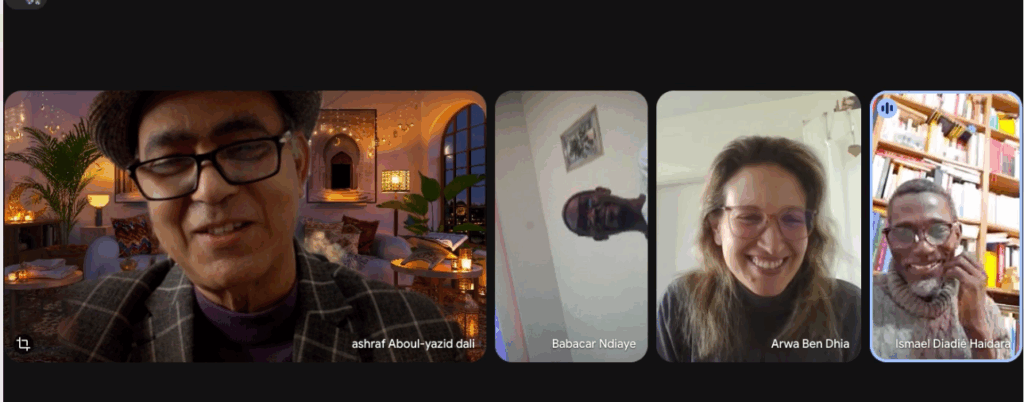 Babacar Ndiaye: A Triangle of Creativity, Society, and Women
During the session, Senegalese publisher Babacar Ndiaye spoke about three major aspects of his cultural journey: the publishing house he founded in Dakar, the literary magazine he produces, and his interest in publishing the French edition of “A Street in Cairo,” a poetry collection by Ashraf Aboul-Yazid.
Aboul-Yazid noted that Ndiaye’s work operates within a creative triangle connecting women, society, and literary expression, reflecting his deep interest in the role of women in Senegalese culture. Ndiaye is known for his multidisciplinary artistic activity: in addition to publishing, he is a poet, visual artist, and storyteller whose work draws inspiration from African oral traditions while exploring themes of identity, spirituality, and humanity’s relationship with nature.
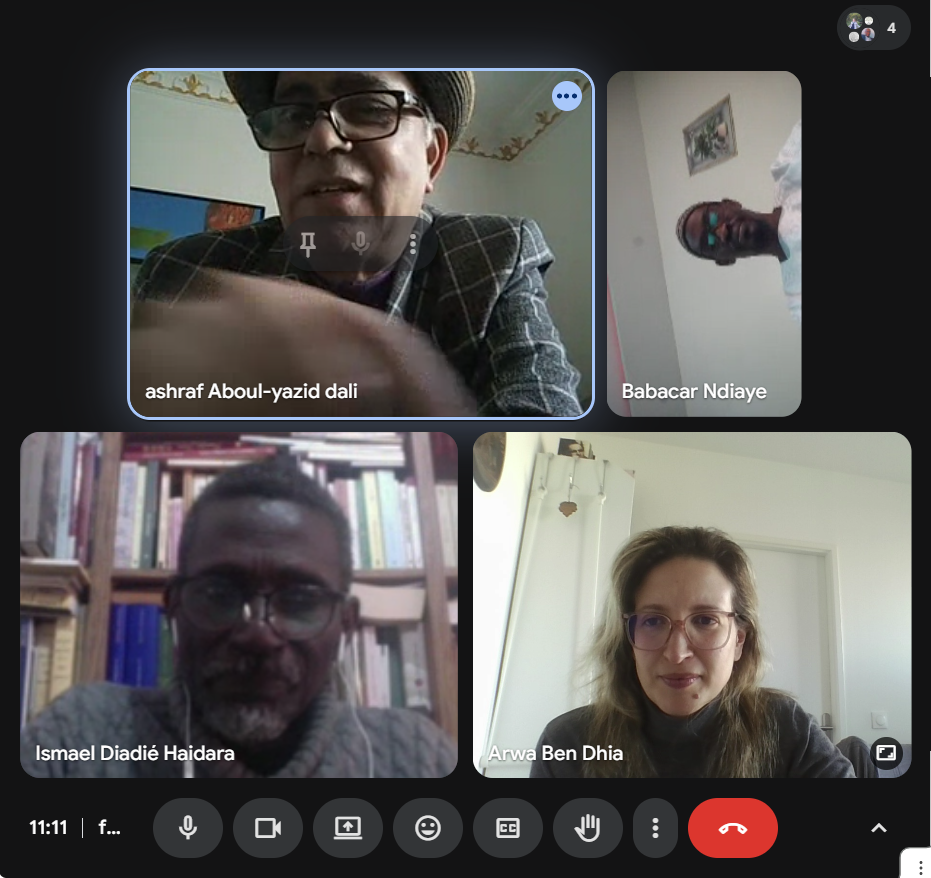
Ismael Diadié Haidara: Poetry Between Memory and Heritage
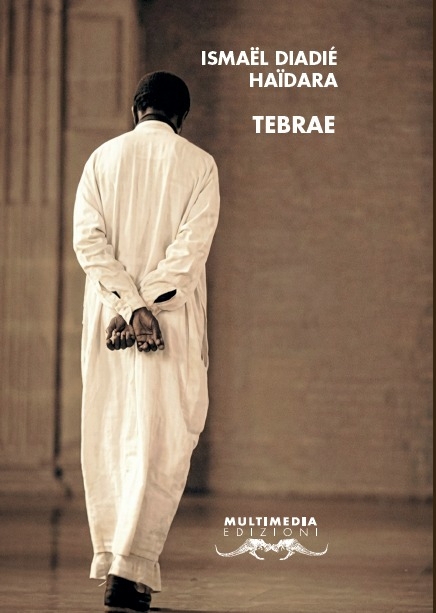
Malian poet Ismael Diadié Haidara shared two important experiences from his creative path. The first concerns his development of Tebrae poetry, a concise poetic form consisting of two lines, recently translated into Italian from Spanish. The second relates to a collaborative project inspired by Francisco Goya’s drawings of war, whose texts were translated into Arabic by Dr. Ashraf Aboul-Yazid.
Haidara also spoke about his cultural efforts to revive “Laylat al-Sahili,” an annual literary evening honoring the legacy of a renowned Malian poet often referred to as the “Mutanabbi of Al-Andalus.”
 Arwa Ben Dhia: Poetry as a Bridge Between Languages
Tunisian poet Arwa Ben Dhia read one of her poems in English, drawn from her French-language poetry anthology. She also spoke about her experience reading and introducing the French edition of “A Street in Cairo,” published by the Senegalese house NJAAY.
Ben Dhia highlighted her participation in international literary events, including the Amazigh Book Fair in Paris last October, and announced her upcoming participation this spring in the African Book Fair in Paris, where she will present a new anthology of African poetry.

“A Street in Cairo” Arrives in Paris
The session also featured the presentation of “A Street in Cairo,” translated into French by Hoda Ashraf with a foreword by Arwa Ben Dhia. Published by NJAAY in Senegal, the collection reached the shortlist of the BALISAILLE International Prize for Poetic Innovation 2025.
During the event, Babacar Ndiaye read in French the poem “Any Woman” from the collection, highlighting the increasing presence of translated Arab poetry within the Francophone literary sphere.
Women as Inspiration and Creative Force
In one of his remarks during the session, Dr. Ashraf Aboul-Yazid pointed to a shared creative thread linking the two African guests: while Ismael Diadié Haidara draws inspiration for Tebrae poetry from the chants of women in the Malian desert, Babacar Ndiaye dedicates his magazine and research to exploring the role of Senegalese women in society and culture.
This convergence reflects the presence of women not only as a source of inspiration but also as active creators within the African literary landscape.
The session concluded by emphasizing that translation and international literary events provide vital spaces for cultural dialogue across continents. African literature—rich in languages, traditions, and creative voices—continues to expand its global presence, carrying the memory and spirit of the continent to wider horizons.