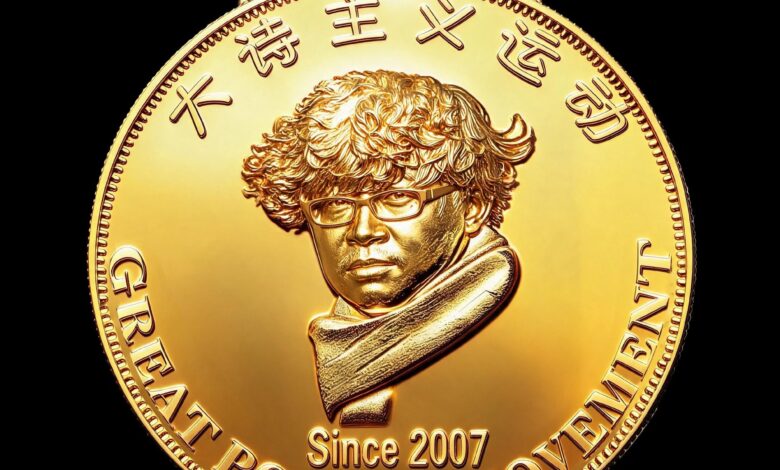
New Medals and Certificates for the Grand Poetic Movement
The Medals Designed by Renowned Sculptor Zhang Guoliang Unveiled!
Starting from 2023, 2 to 4 medals will be awarded annually to master poets from all over the world. New certificates will also be reissued to recipients who received medals in the previous four years. Below is the list of poets who have received or are set to receive the medals:
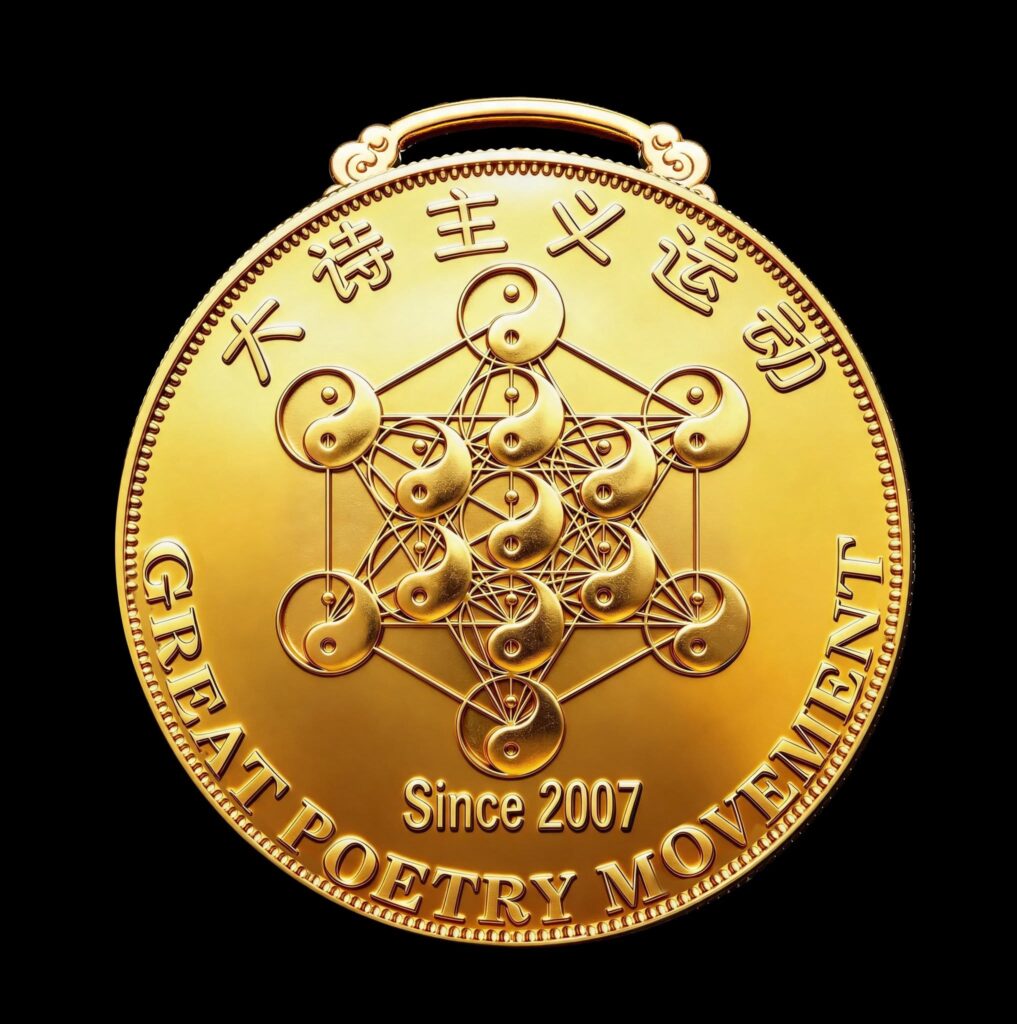
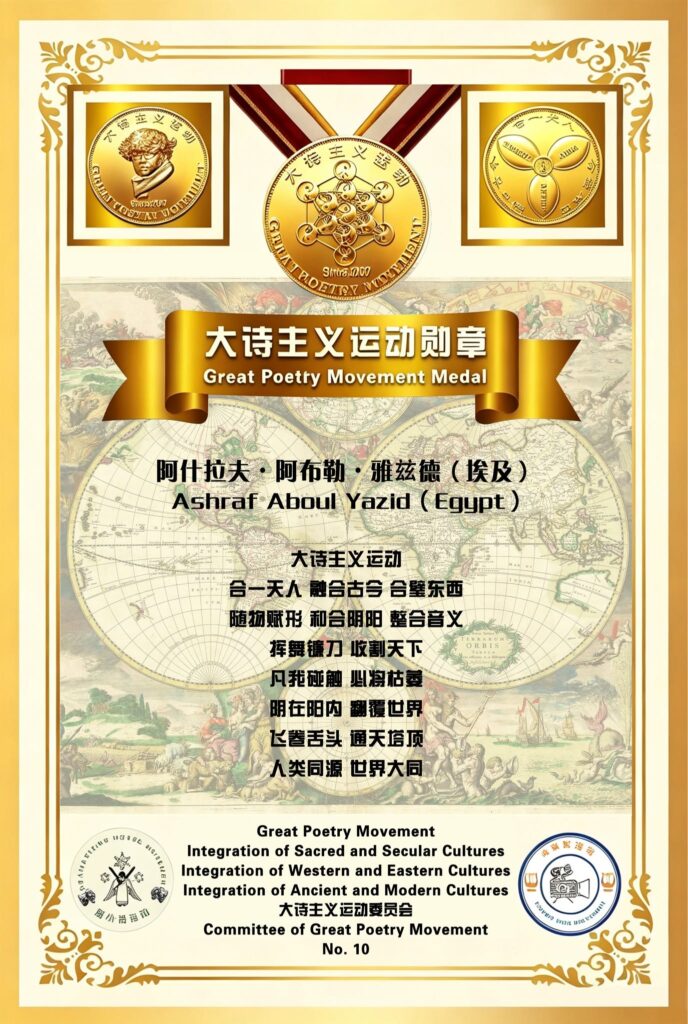
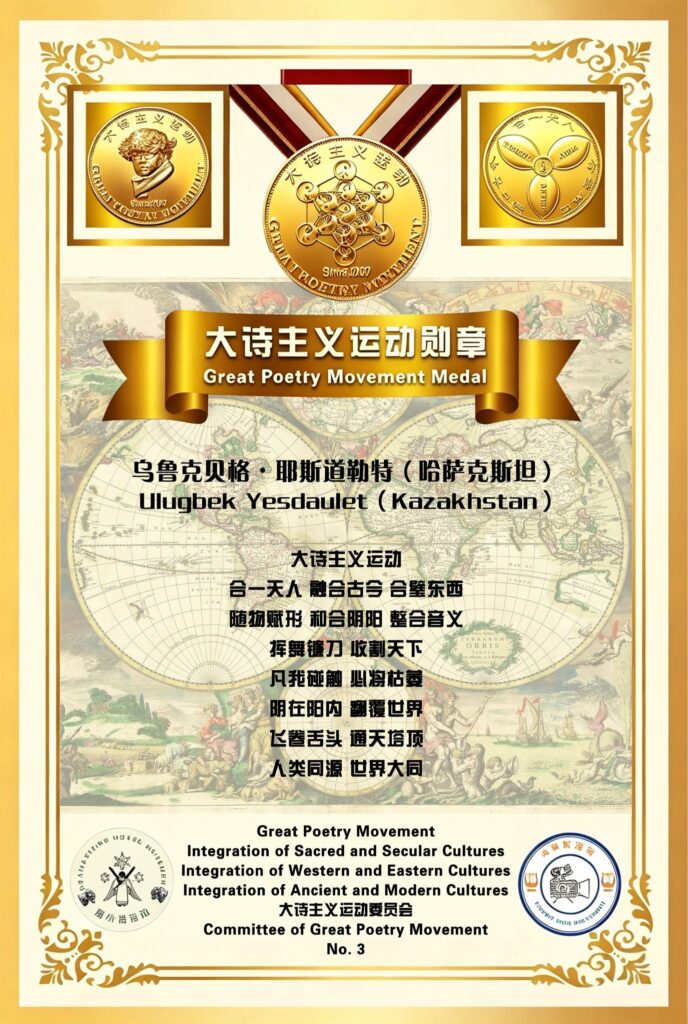
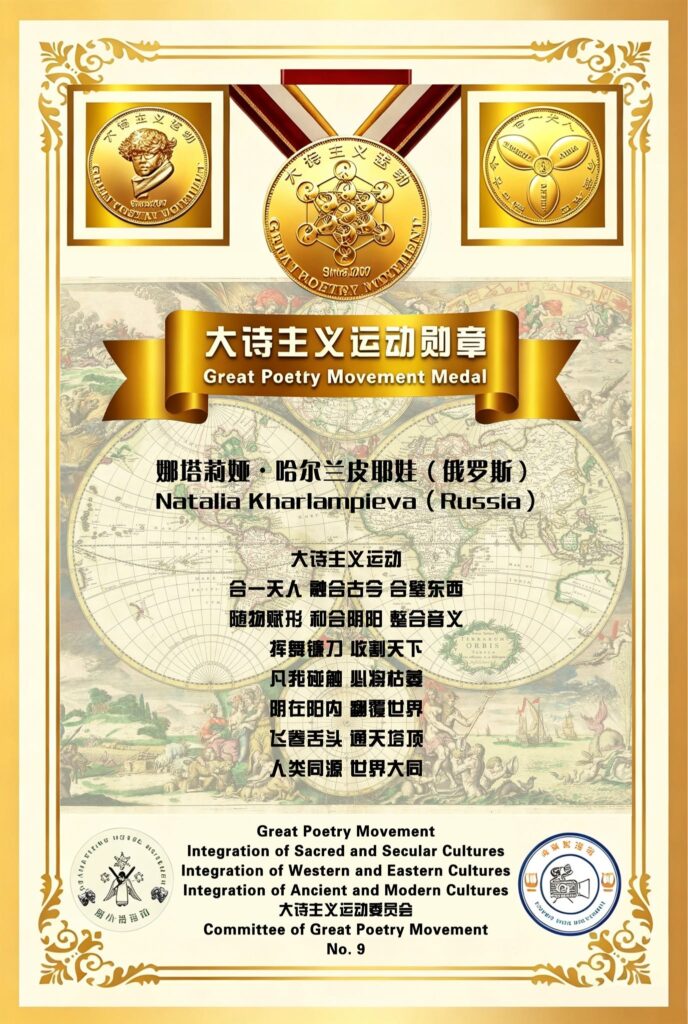
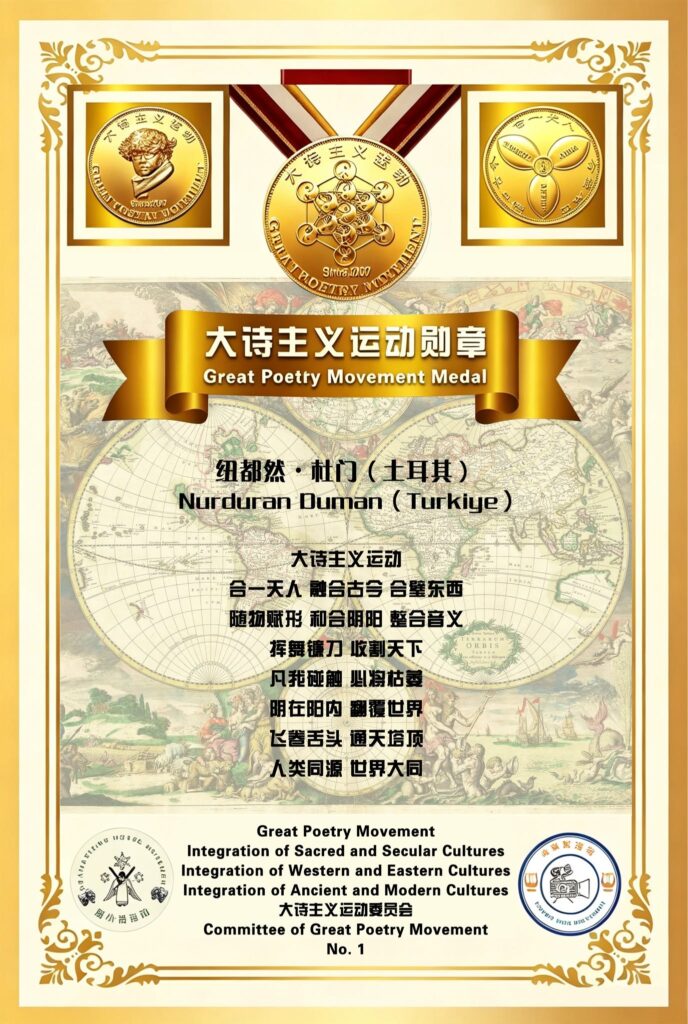
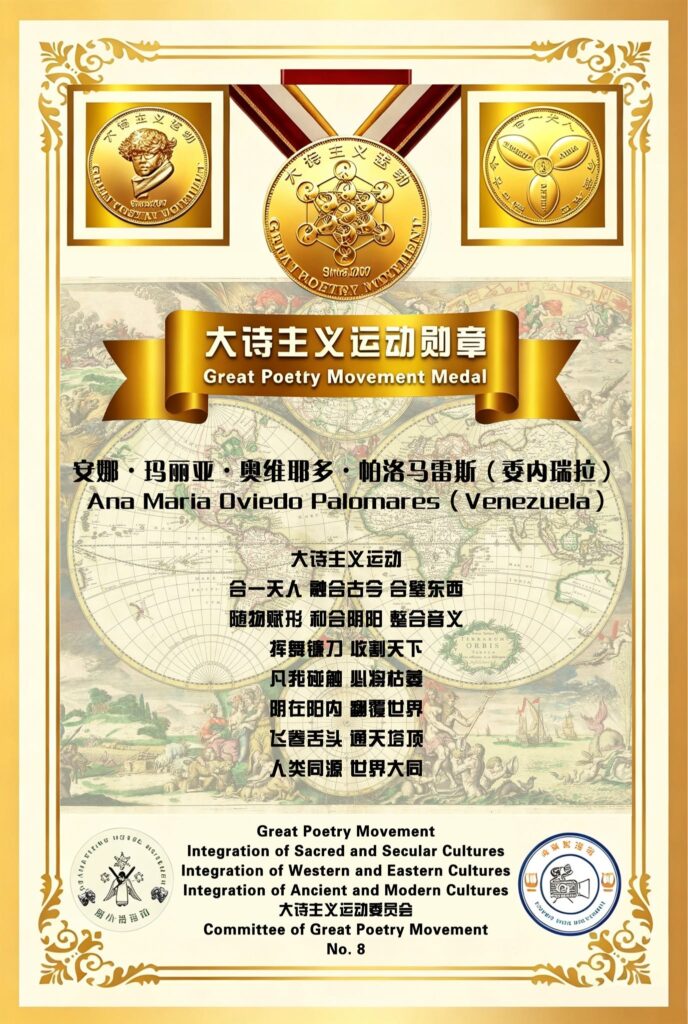
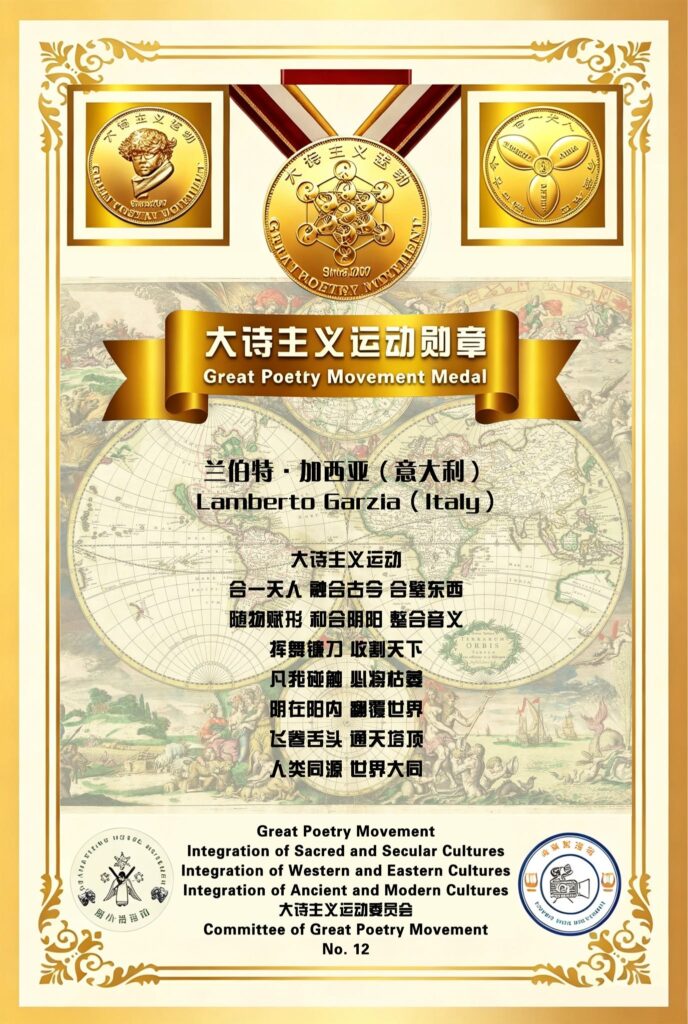
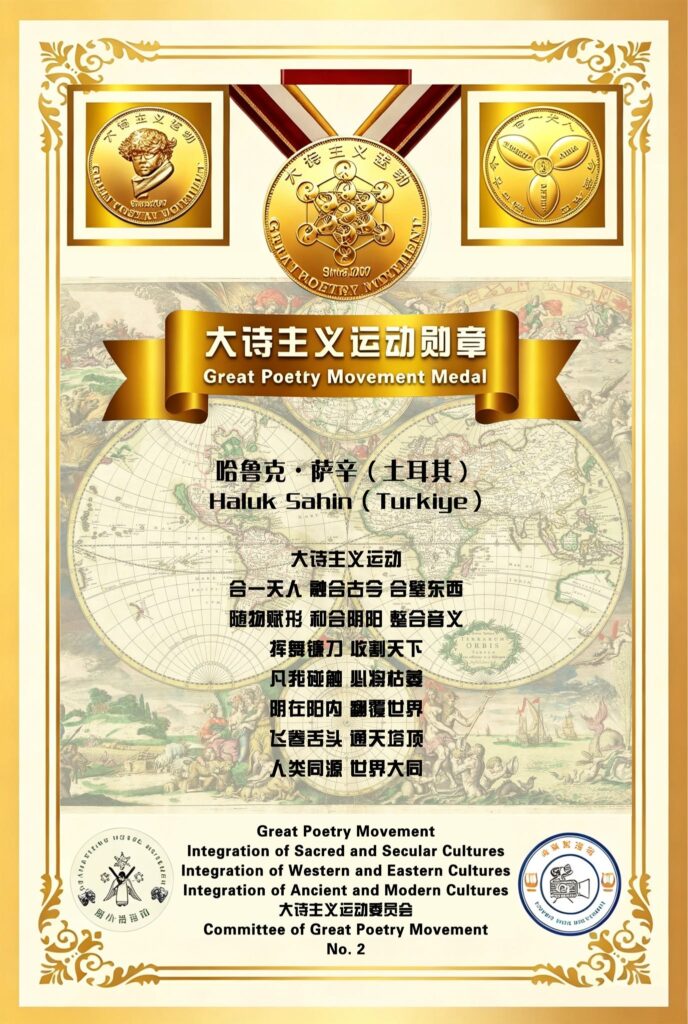
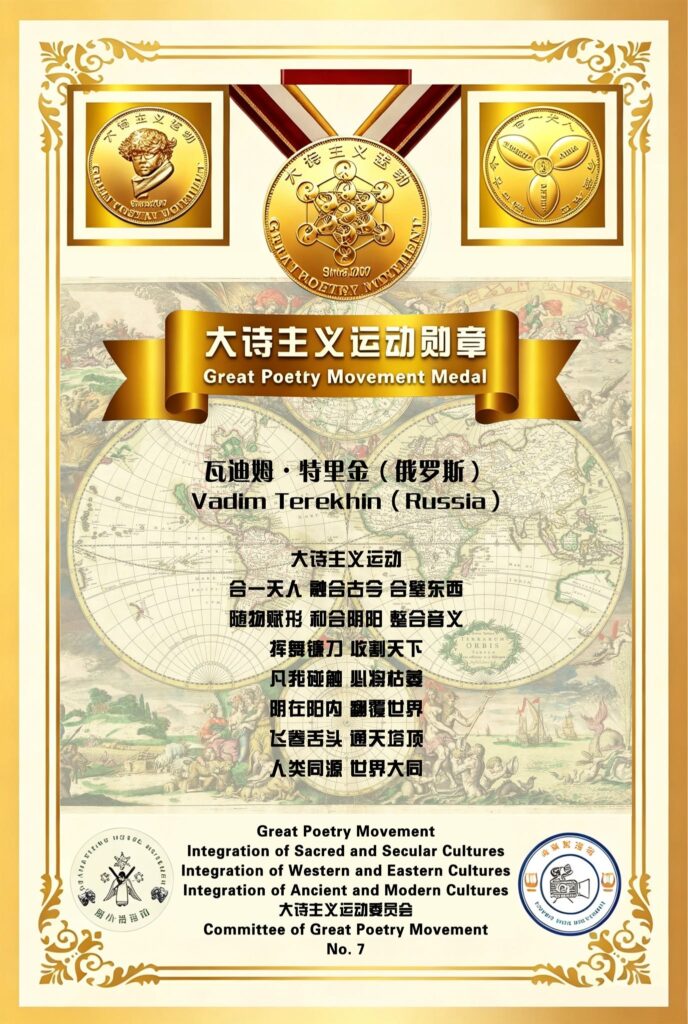
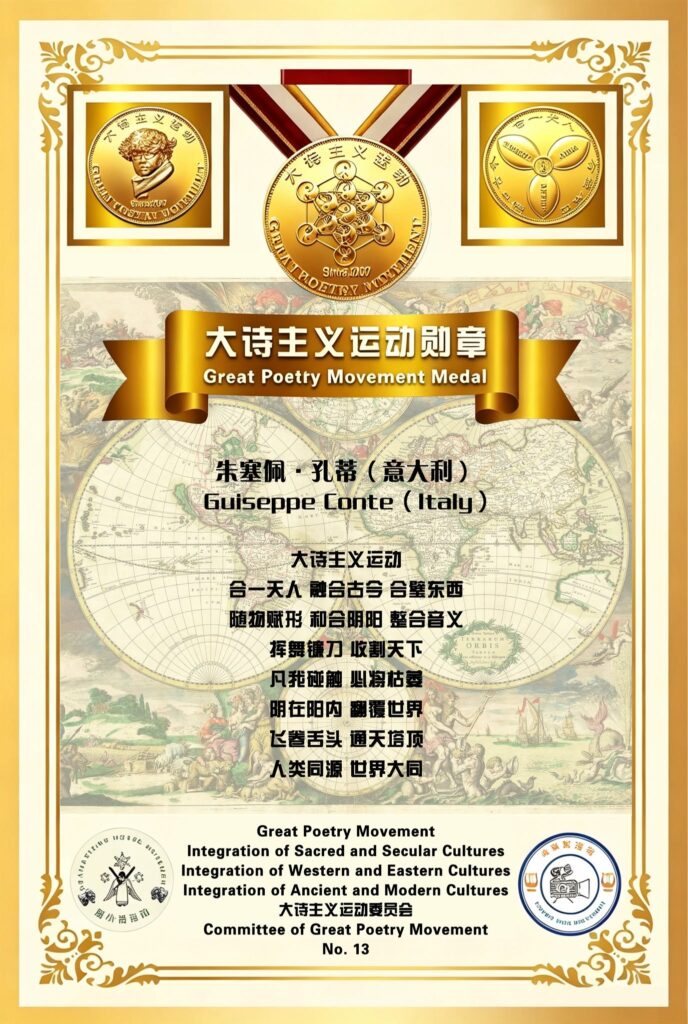
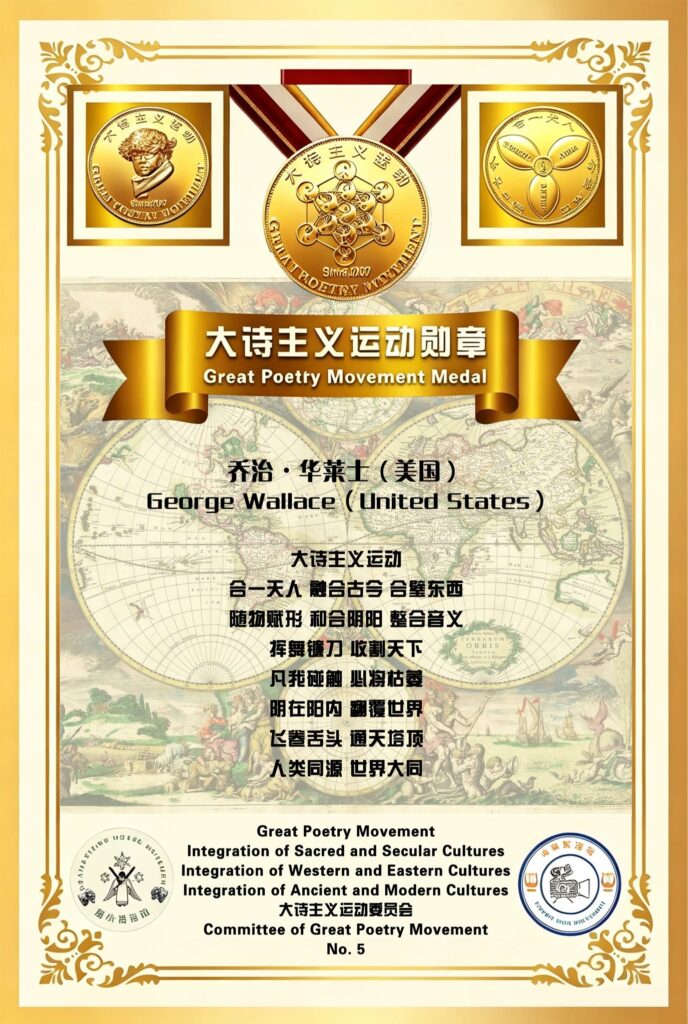
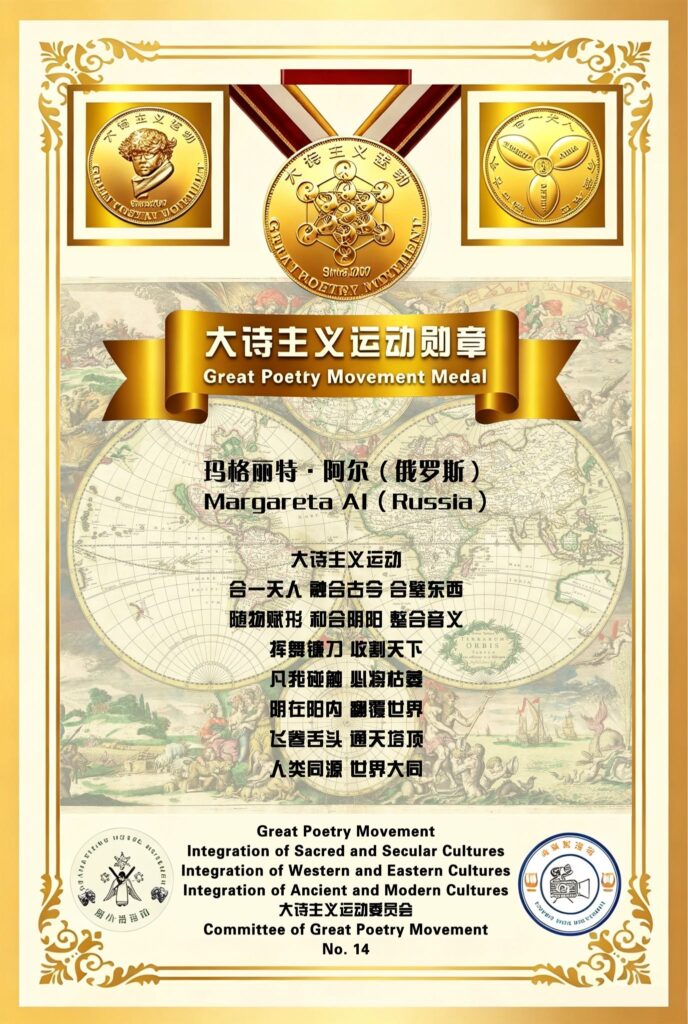
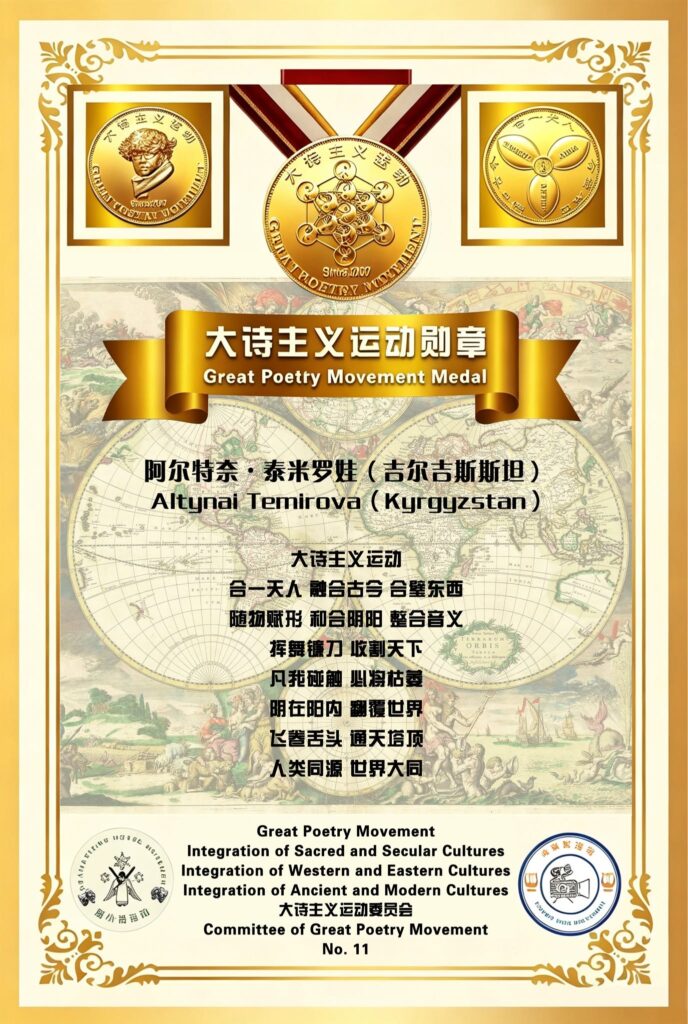
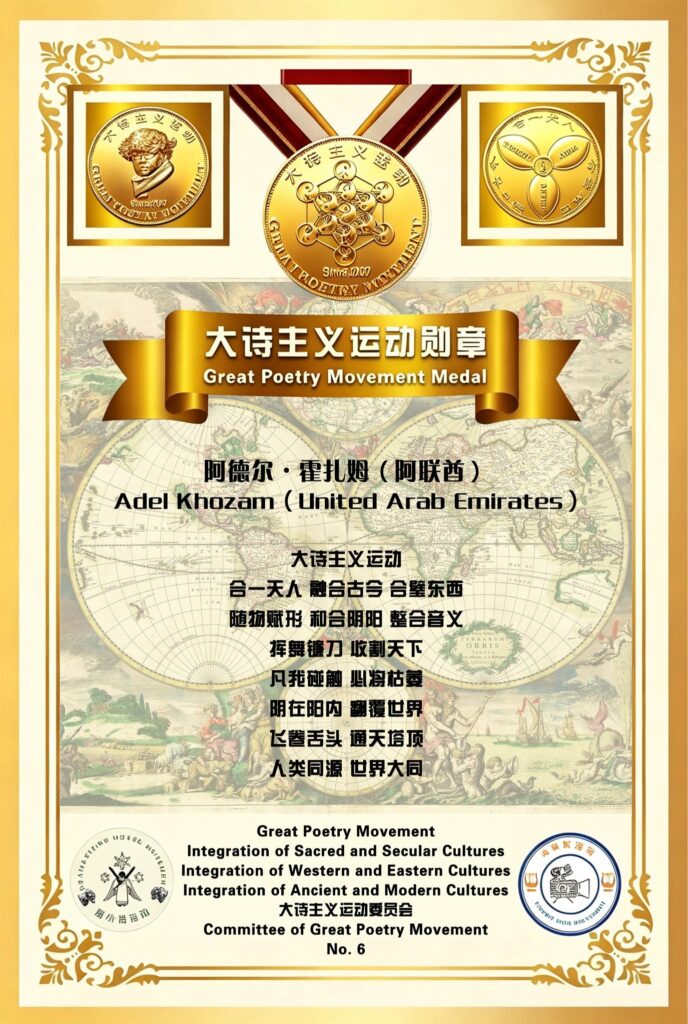
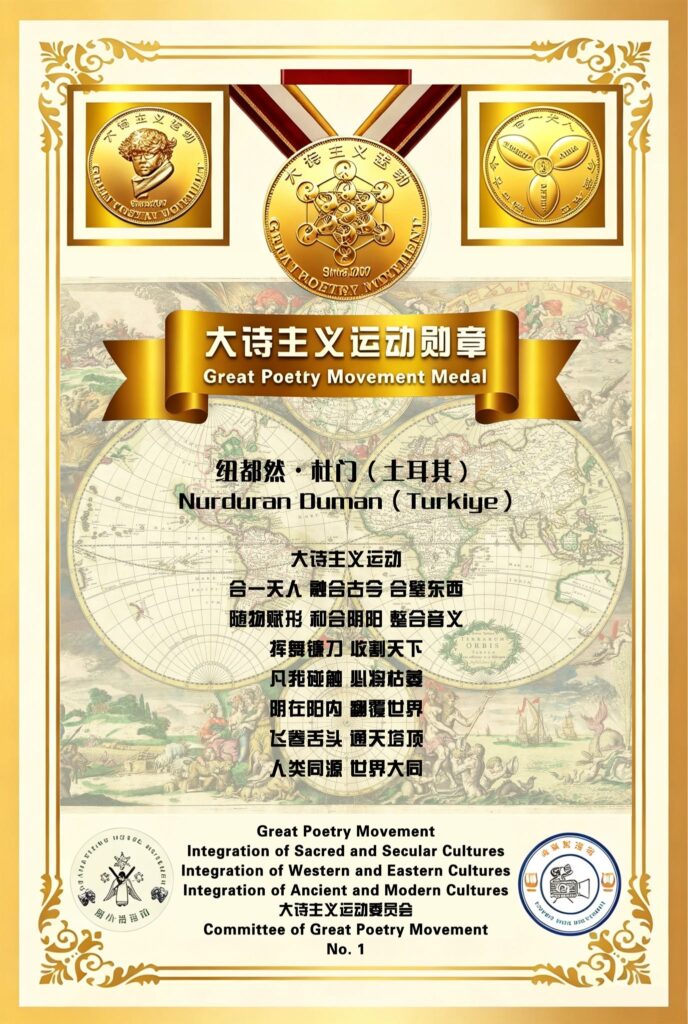
No.1 Nurduran Duman (Turkiye) No.2 Haluk Sahin (Turkiye) No.3 Ulugbek Yesdaulet (Kazakhstan) No.4 Fernando Rendon (Colombia) No.5 George Wallace (United States) No.6 Adel Khozam (United Arab Emirates) No.7 Vadim Terekhin (Russia) No.8 Ana Maria Oviedo Palomares (Venezuela) No.9 Natalia Kharlampieva (Russia) No.10 Ashraf Aboul Yazid (Egypt) No.11 Altynai Temirova (Kyrgyzstan) No.12 Lamberto Garzia (Italy)
Introduction to the Great Poetry Movement Medal
Established by the Great Poetry Movement Committee in 2023, the Great Poetry Movement Medal is awarded annually to international poets who have made outstanding contributions to great poetry creation and epic inheritance. Since its inauguration, distinguished poets from around the world have received this honor:
2023: Turkish poet Nurduran Duman, Haluk Sahin (Chairman of the Homer International Poetry Festival), and Ulugbek Yesdaulet (former Chairman of the Writers’ Union of Kazakhstan)
2024: Fernando Rendon (Chairman of the Medellín International Poetry Festival), American poet George Wallace, and Emirati poet Adel Khozam
2025: Vadim Terekhin (Co-chairman of Russian Union of Writers and Poets), Venezuelan poet Ana Maria Oviedo Palomares (Chairwoman of the World Poetry Festival) and Russian poet Natalia Kharlampieva (Chairwoman of Yakutian Literary Festvial)
2026: Egyptian poet Ashraf Aboul Yazid, Kyrgyz poet Altynai Temirova and Italian poet Lamberto Garzia.
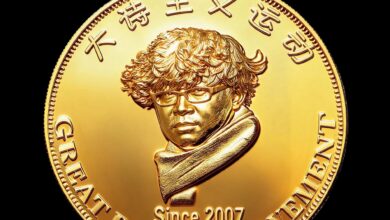
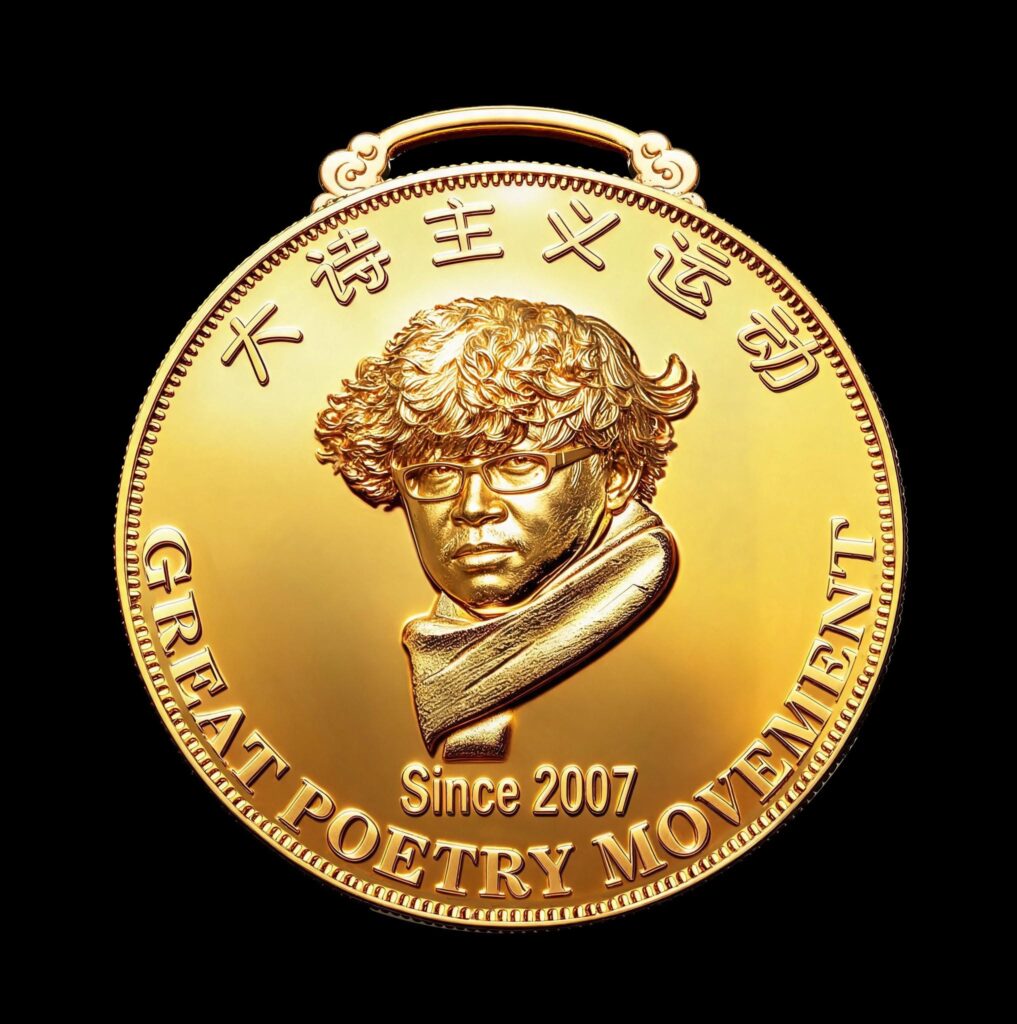
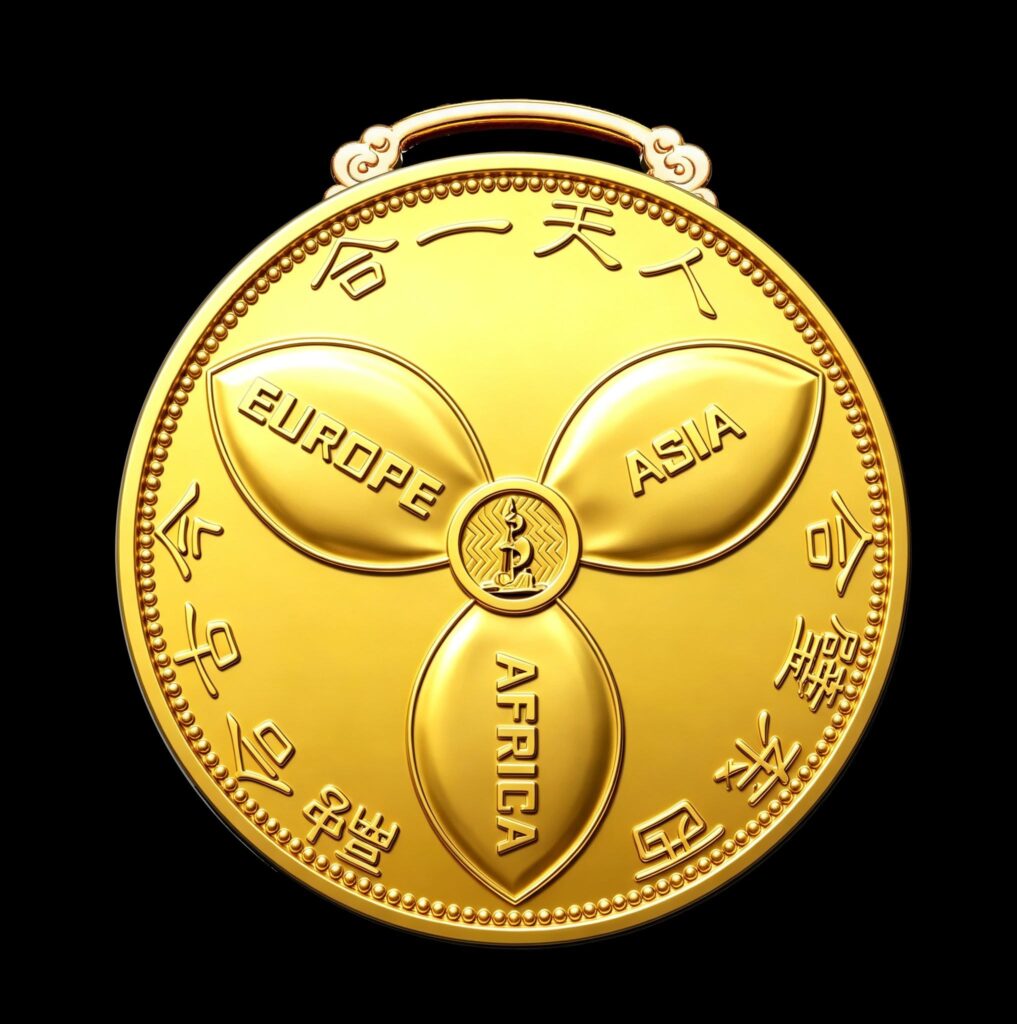
The new medal is crafted from pure silver, with a diameter of 70mm, a thickness of 3.4mm and a weight of 70g. The entire creation process brings together celebrated artists: the portrait was photographed by renowned photographer Song Zuifa, the overall design was completed by sculptor Zhang Guoliang, and the seal was engraved by famous calligrapher Gu Mingchuan.
The obverse side features the portrait of Cao Shui, founder of the Great Poetry Movement, with the inscription “GREAT POETRY MOVEMENT” in both Chinese and English. The reverse side takes the 1581 clover-shaped ancient map of Asia, Europe and Africa drawn by German geographer Heinrich Bünting as its core pattern, marked withASIA, EUROPE, AFRICAin English. Representing the ancient world known to humanity and symbolizing the shared spiritual home of all mankind, the map is surrounded by the core philosophy of the Great Poetry Movement:integrating the ancient and modern, bridging the East and West, unifying heaven and humanity.
Great Poetry Movement is a highly influential poetic trend in 21st-century Chinese poetry. Its spiritual origin can be traced back to early human epics, and the concept of “great poetry” was first proposed by poet Hai Zi in the 1980s. In 2007, poet Cao Shui wrote theManifesto of Great Poetry Movementand co-launched the movement with poets including Xi Yuan and Xi Di. It advocates extracting cultural elements from global civilizations to construct a brand-new world of poetic imagery under the principles of unifying heaven and humanity, bridging the East and West, and integrating the ancient and modern.
The movement publishes the folk journalGrand Poetry · Literary Perspectiveand is ranked among China’s 20 avant-garde poetic schools. In the Literary Theory volume ofDancing on the Pen Tip: A Witness to Post-80s Literature(originally titledHistory of Post-80s Literature) edited by Xu Duoyu, the movement is introduced in a dedicated chapter. Alongside Statism and Sensory Writing, it is recognized as one of the three major literary trends initiated by post-80s Chinese writers, with a large number of representative post-80s and post-90s poets emerging from its ranks.
From 2018 to 2020, Cao Shui, representing the Great Poetry Movement, engaged in a three-year academic debate with Yi Sha’s Post-Colloquial Poetry School, later known as the “Cao-Yi Dispute” in poetry circles. In the first issue ofLiterary Freedom Forumin 2023, Cao Shui published the articleThe Cao-Yi Dispute and Ten Major Malpractices of the Chinese Literary Circleas the cover figure. He summarized that the debate erupted on the centenary of the publication of Hu Shi’sCollection of Experiments, and is widely interpreted by the industry as “the debate over the century-long path of Chinese new poetry”. It is regarded as the largest academic debate in Chinese poetry since the 1998 “Panfeng Debate”, and also hailed as “the most modern debate of the 21st century”. Centering on the development direction of Chinese new poetry, the debate has also promoted in-depth reflections on the literary ecosystem and public calls for literary improvement. Since Cao Shui joined the World Poetry Movement in 2017, the Great Poetry Movement has gradually spread across the globe, becoming an international poetic movement with cross-cultural influence