Dr. Ashraf Aboul-Yazid Honored at Benha Culture Palace: A Poet Returns to the Wellspring of His Dreams
One-Day Literary Forum Explores "Children's Literature: Terminology and Concept – Qalyubia as a Model"
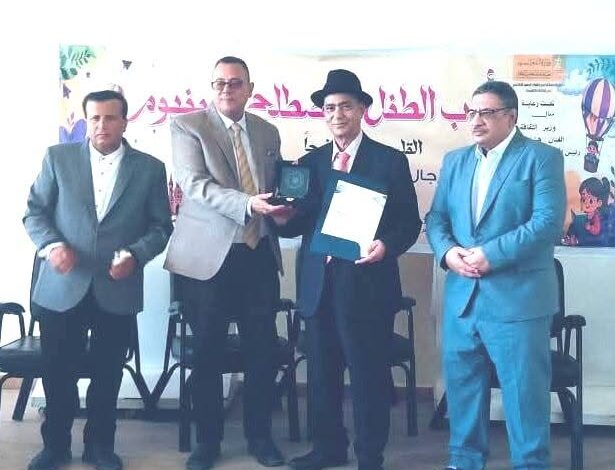
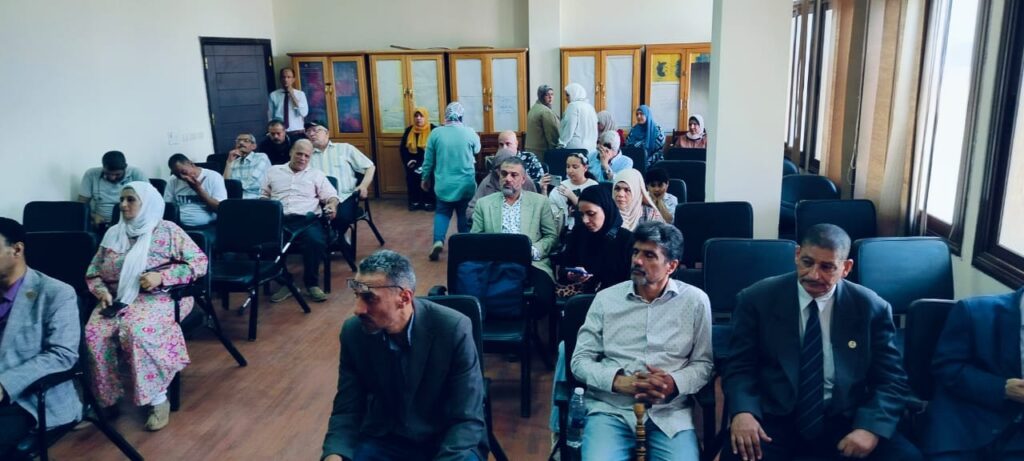
In a ceremony where gratitude met well-deserved recognition, poet, novelist, and traveler Dr. Ashraf Aboul-Yazid returned to Benha Culture Palace—the place where his poetic journey began nearly five decades ago. This time, however, he returned as the guest of honor, celebrated by the people of his home governorate in an event that beautifully united memory and creativity. The occasion took place during the One-Day Literary Forum, held under the theme “Children’s Literature: Terminology and Concept – Qalyubia as a Model,” in a session dedicated to the memory of the late poet and vernacular poet Sami El-Badawi.
The forum was organized by the General Authority for Cultural Palaces, headed by artist Hesham Attwa, as part of the Egyptian Ministry of Culture’s cultural programs, bringing together an elite group of writers, critics, researchers, and specialists in children’s literature.
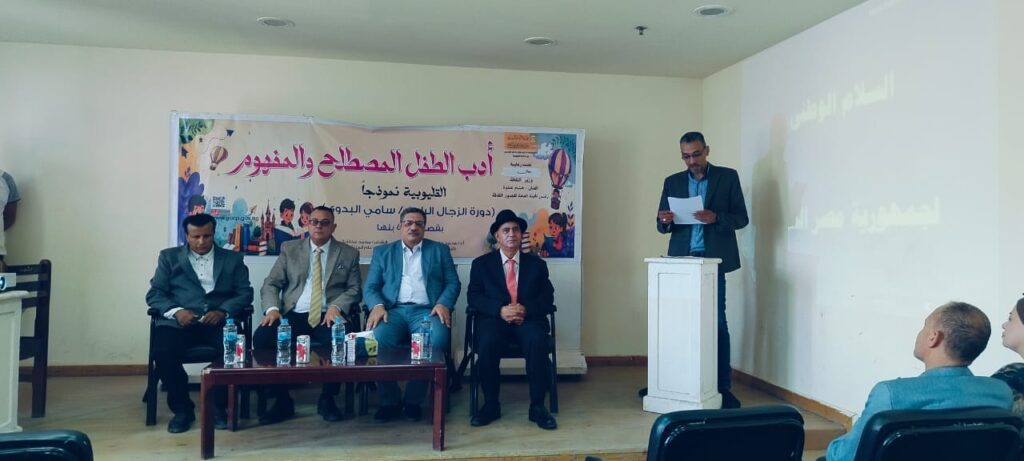 The event opened with an inaugural session moderated by poet Mohamed El-Baytar, Chairman of the Literary Club at Qanater El-Khayriya Culture Palace. Among those in attendance were Dr. Mohamed Helmy Hamed, President of the Forum; poet and artist Mohamed Okasha, Secretary-General of the Forum; Yasser Farid, Director-General of the Qalyubia Culture Branch; together with a distinguished gathering of intellectuals, critics, and scholars devoted to children’s literature.
In his opening address, Dr. Mohamed Helmy Hamed emphasized that children’s literature is one of the most influential cultural resources for shaping the consciousness of future generations, thanks to its unique ability to instill values while developing children’s intellectual and social skills. He stressed that children’s literature is far more than a form of entertainment; it is a comprehensive educational and cultural project that contributes to the formation of human character from the earliest years of life.
Dr. Hamed also discussed the unique challenges of writing for children, highlighting the need to combine linguistic simplicity with depth of meaning while carefully addressing different stages of childhood development. He reviewed the achievements of the pioneers of children’s literature on both the international and Arab levels, including Ahmed Shawqi, Kamel Kilani, and Mohamed El-Harawy, alongside distinguished writers from Qalyubia Governorate such as Sobhi Shehata and Mahmoud Abu Eisha.
He concluded by stressing the importance of supporting children’s literature in the face of the challenges posed by the digital age through encouraging specialized publishing, integrating children’s literature into educational curricula, and fostering critical thinking rather than direct moral instruction, so that books may continue to accompany children throughout their journey of self-discovery and personal growth.
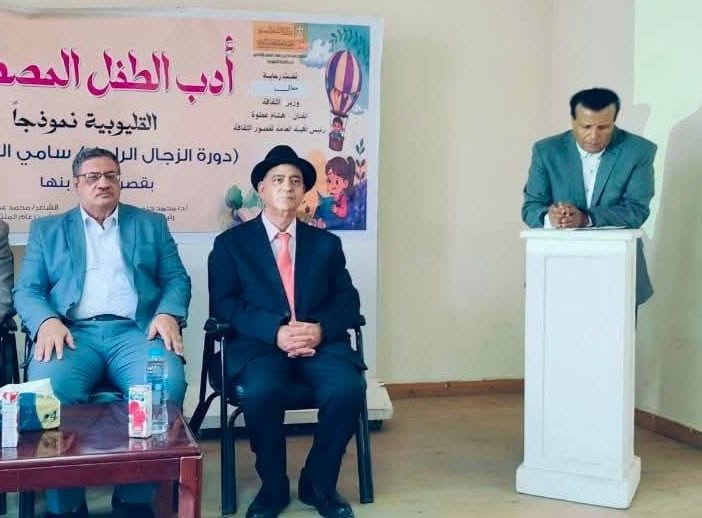 For his part, poet Mohamed Okasha noted that Qalyubia Governorate possesses a distinctive creative identity, blending both agricultural and industrial environments into a unique cultural landscape. He added that the governorate enjoys a rich legacy in children’s literature and arts, thanks to the remarkable contributions of its writers and artists in the fields of children’s stories, poetry, theatre, songs, and stage performances.
He further explained that the forum presents a collection of critical studies documenting the movement of writing and publishing in children’s literature, thereby enriching both cultural and literary criticism. He emphasized that children’s literature carries an exceptionally sensitive educational and artistic mission, particularly in an era dominated by digital media and electronic platforms. Today’s children, he concluded, need creators who possess both awareness and the creative ability to shape the imagination and consciousness of future generations.
Artist Yasser Farid affirmed that choosing children’s literature as the central theme of the forum reflects the General Authority for Cultural Palaces’ firm belief that building a nation begins with shaping the consciousness of its children. He emphasized that literature written for young readers is not merely a source of entertainment, but a powerful means of education, enlightenment, and the cultivation of imagination and creativity, helping to form individuals capable of critical thinking, meaningful dialogue, and a strong sense of belonging. He also expressed his sincere appreciation to all the researchers, lecturers, and organizers, wishing that the forum’s recommendations would further enrich the cultural movement in Qalyubia Governorate.
The session also featured a heartfelt tribute by Dr. Wafaa Sami El-Badawi, daughter of the late poet, who reflected on her father’s life and creative legacy. She portrayed him as an exemplary father and artist whose life embodied refinement, integrity, and unwavering cultural commitment, leaving behind a model worthy of admiration and emulation.
Before introducing the guest of honor, poet Mohamed El-Baytar presented the documentary “A River on a Journey,” directed by journalist and filmmaker Fatma El-Zahraa Hassan. Through poetic narration and evocative musical score, the film traces Dr. Ashraf Aboul-Yazid’s literary and cultural journeys across the continents, highlighting his long engagement with the Silk Road and the dialogue of civilizations that has characterized his encounters with diverse cultures and peoples.
In his address, Dr. Ashraf Aboul-Yazid expressed his profound gratitude for being honored in the city where his literary journey first began. He noted that returning to Benha Culture Palace meant returning to the very roots of his dreams and aspirations. He opened his speech by paying tribute to the memory of the late poet and vernacular poet Sami El-Badawi, whom he remembered as both a close friend and a remarkable creative figure. Dr. Aboul-Yazid emphasized that El-Badawi’s recorded legacy of vernacular poetry constitutes an invaluable cultural document worthy of preservation and continued care, standing as a living testament to an important chapter in the history of Egyptian folk creativity:
“Dear Friends,
Allow me to extend my deepest gratitude and appreciation to the distinguished Professor, President of this Forum, and my heartfelt thanks to the poet and artist, the Forum’s Secretary-General, for this gathering overflowing with affection and loyalty, and for this generous tribute presented by the One-Day Conference organized by the General Authority for Cultural Palaces in Qalyubia Governorate.
My joy at receiving this honor is doubled because it comes here in Benha—my hometown and birthplace—the city that first opened the gates of dreams before me, witnessed my earliest steps with words and poetry, and embraced the beginnings of my literary journey within the very place that illuminated my path toward knowledge.
Today, I find myself recalling memories that go back nearly five decades, when I was the youngest member of the Literary Club. I remember, in particular, the Ramadan evenings that were true festivals for the soul. While many people would spend their evenings after Iftar watching television series and entertainment shows, the young poet I once was would hasten to the beginning of Abdel Hafez Street to catch the vehicle heading to Benha Culture Palace. From there, the Palace’s minibus would take the members of the Literary Club on journeys to cultural centers and palaces throughout Qalyubia Governorate—from Kafr Shukr to Shubra El Kheima, and from Toukh to El Qanater El Khayriya. There, literary gatherings would begin, voices would exchange poems and vernacular verses, and we would return home having participated in a timeless literary ritual whose radiance still shines in my memory today.
Between Martyr Abdel Moneim Riyad Primary School, the Sadat Library for Children and Adults, and the library of Benha Culture Palace, the contours of my life gradually took shape. There my dreams grew, and my journey found its direction. My encounters with the late cultural figures of Benha became an invaluable source of spiritual and intellectual nourishment. Even after my travels took me across distant lands, every return to Benha became an opportunity to renew that bond and to record memories with those remarkable personalities—moments that have triumphed over time and remain preserved in memory.
Thus, although the roads of life have carried me to nearly forty countries around the world, Benha has remained both my first and my final harbor. No matter how long the journey, one must always return to Benha.
Today, at this forum dedicated to children’s literature, I am delighted to announce my latest book for young readers, Grandmother Rawiya’s Papyri, and to present copies of this new publication to the distinguished President of the Forum and to the poet and artist serving as its Secretary-General.
I am equally pleased to present the audience with copies of my illustrated travel anthology, A River on a Journey, from which you have just watched selected scenes, and to donate a collection of my books to the library of Benha Culture Palace as a token of love, gratitude, and loyalty to a place that has given me so much.
My sincere appreciation also goes to the Ministry of Culture, represented by the General Authority for Cultural Palaces under the leadership of artist Hesham Attwa; to the Greater Cairo and North Upper Egypt Cultural Region, headed by Ahmed Darwish; to the Qalyubia Culture Branch, headed by Yasser Farid; and to the organizers of this One-Day Conference hosted by the General Authority for Cultural Palaces in Qalyubia Governorate.
I would also like to extend my special thanks to Professor Dr. Mohamed Helmy Hamed and the poet and artist Mohamed Okasha for preparing and publishing the commemorative volume, The Literary Traveler, which brings together testimonials and critical essays by distinguished cultural figures from around the world about my literary experience. I regard this book as a tribute not only to my journey, but also to literature itself and to the many friends who believed in it. I am deeply grateful for the thoughtful words they contributed to its opening pages.
Finally, my heartfelt thanks go to my beloved city of Benha—the city that taught me that words are a homeland, and that returning to one’s beginnings is never a retreat into the past, but rather an everlasting reunion with one’s roots.”
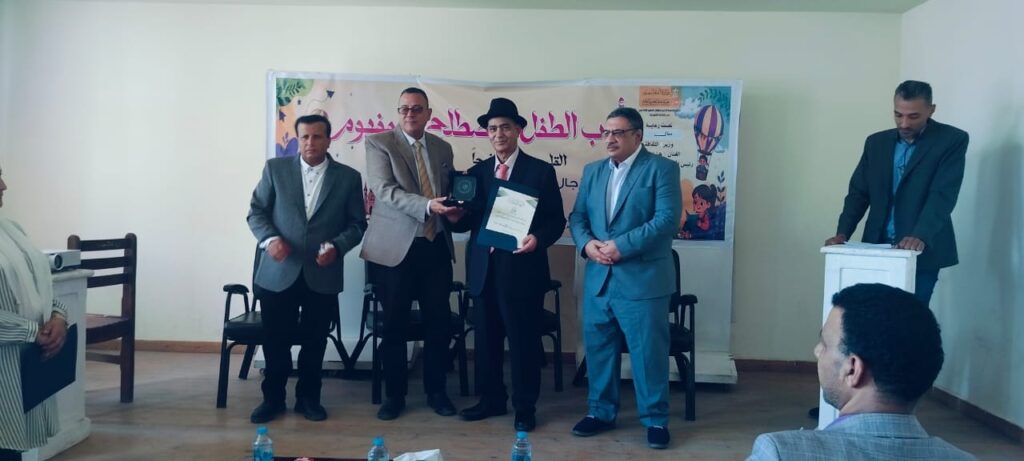
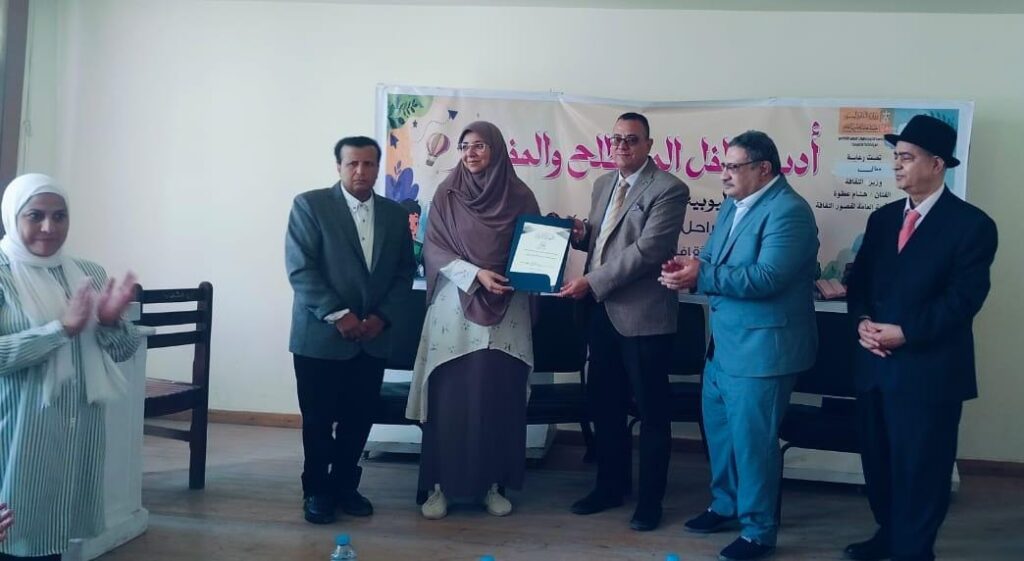
The session concluded with a special tribute to Dr. Ashraf Aboul-Yazid, in recognition of his distinguished literary and cultural career and his outstanding contributions to poetry, fiction, children’s literature, translation, and international cultural cooperation. He was honored as one of Qalyubia Governorate’s most accomplished sons, whose work has carried Egypt’s cultural identity to literary forums around the world. The ceremony also honored Dr. Mohamed Helmy Hamed, President of the Forum, and poet Mohamed Okasha, Secretary-General of the Forum, while paying tribute to the memory of the late poet and vernacular poet Sami El-Badawi.
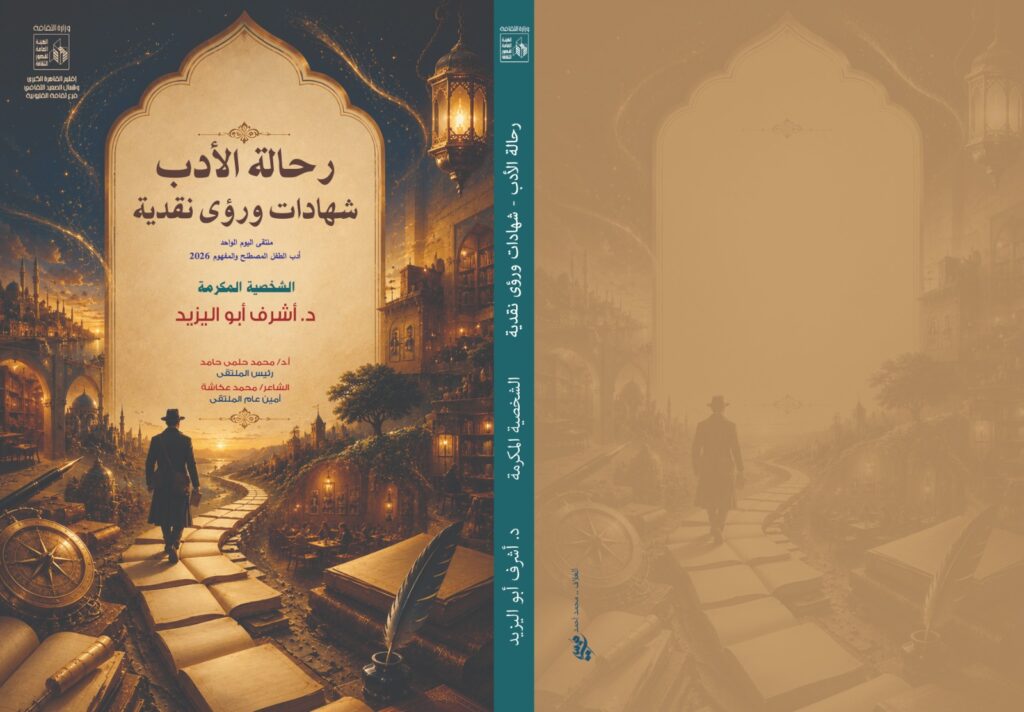
The Honoree’s Book: The Literary Traveler: Dr. Ashraf Aboul-Yazid – Testimonials and Critical Perspectives
It is uncommon for a writer to become the subject of an entire volume of testimonials and critical studies while still at the height of his creative career. Yet The Literary Traveler: Dr. Ashraf Aboul-Yazid – Testimonials and Critical Perspectives demonstrates that the experience of the Egyptian poet, novelist, traveler, journalist, and translator Ashraf Aboul-Yazid has transcended the boundaries of individual achievement to become a cultural phenomenon that spans continents.
The volume brings together dozens of literary and intellectual voices from the Arab world, Asia, Europe, Africa, and Latin America, creating a rich humanistic and creative panorama of the author of The Silk Road, A Street in Cairo, and Shamawes.
The book opens with two introductory essays: the first by Professor Dr. Mohamed Helmy Hamed, President of the Forum, and the second by poet and novelist Mohamed Okasha, Secretary-General of the Forum.
The main body of the volume begins with a moving tribute by the renowned Korean poet Ko Un, who writes that Ashraf Aboul-Yazid’s spirit stretches between ancient and modern Egypt, embodying a universal brotherhood that transcends borders. He emphasizes that honoring Aboul-Yazid during his lifetime is a rare and well-deserved recognition of a writer who has devoted his life to literature and intercultural dialogue.
Chinese poet Cao Shui, founder of the Great Poetry Movement, contributes an in-depth critical essay portraying Aboul-Yazid as a poet who transforms his experiences in travel, translation, and creative writing into a bridge between civilizations. He presents him as a truly global literary voice, uniting the heritage of the Nile with the anxieties of the modern world, and harmonizing the sacred with the everyday in a distinctive poetic vision.
From Egypt, acclaimed novelist Ibrahim Abdel Meguid writes about what he calls “the traveler across continents,” reviewing Aboul-Yazid’s remarkable achievements in fiction, poetry, children’s literature, translation, journalism, and travel writing. He concludes that Ashraf Aboul-Yazid represents a rare creative phenomenon whose accomplishments cannot be confined to a single literary genre.
Spanish writer and explorer Jordi Esteva describes Aboul-Yazid’s work as a solid bridge between languages and cultures, while filmmaker and author Fatma El-Zahraa Hassan examines his significant contributions to art criticism and the sociology of art, highlighting his books and scholarly studies that approach visual arts from a broad cultural and humanistic perspective.
In a remarkable contribution, Syrian writer Hani Nadim offers a deeply personal and human portrait of Ashraf Aboul-Yazid, describing him as “the last encyclopedia” for his extraordinary range of talents, encompassing poetry, fiction, painting, translation, journalism, and travel writing, as well as for his influential presence on both the Arab and international cultural scenes.
From Russia come the testimonies of Olga Medvedko and Inna Nacharova. Medvedko regards him as “a bearer of culture,” someone who has dedicated his efforts to building bridges between peoples, while Nacharova calls him “the Gentleman of the Bridge of Friendship,” acknowledging his role in introducing her works to Arab readers through translation and intercultural exchange.
Serbian translator Dr. Ana Stjelja reflects on her experience of translating his poetry into Serbian, describing the process as a journey through cities and souls alike. Meanwhile, Azerbaijani poet Eldar Akhadov recalls memories of their friendship and shared travels between Baku and Moscow, affirming that Aboul-Yazid does not merely bring people together as friends, but unites them as brothers and sisters in poetry and spirit.
From Venezuela, poet Mariella Cordero offers a critical reading that connects the legacy of ancient Egyptian poetry with Aboul-Yazid’s contemporary work. She argues that his poems continue a timeless human tradition extending from the Pharaonic love songs to the modern poetic voice.
The volume continues with a rich collection of multicultural and multilingual testimonials contributed by Dr. Hanan Awwad, Ismail Diadi Haidara, Dr. Hussein Abdel Basir, Atef Mohamed Abdel Meguid, Mohamed Abdel Rahim, Ehab Sayed Ahmed, Virginia Fernández Collado, Dr. Hiyam Al-Maamari, Souad Al-Zamak, Dr. Hoda Saleh, Dr. Mohamed Said, Tarek Omran, Mohamed Ali Azab, Misna Chanu, Dr. Keshab Sigdel, Taghrid Bou Merhi, Luciano Somma, Mikhosh Abdullah, Gioia Lomasti, Elmaya Jabbarova, Dr. Hamza Moulakhnev, Dr. Sabina K., Khaled Suleiman, Dr. Iman Biqa’i, Noha Sweid, Tarek Al-Omrawi, Dr. Fayez Al-Dayeh, Dr. Abdul Nazer K. B., and Dr. Diaa El-Din Helmy El-Fiqi.
Despite the contributors’ diverse cultural and geographical backgrounds, a common thread runs through most of the essays: they view Ashraf Aboul-Yazid as a model of the globally engaged Arab intellectual—one who has not confined himself to writing and creative expression, but has transformed translation, travel, and intercultural dialogue into a lifelong humanitarian mission. To some, he is above all a poet; to others, a traveler, translator, or journalist. Yet all agree on one essential truth: he is the architect of a cultural project that transcends national borders and reaches toward a broader human horizon.
Readers of The Literary Traveler come away with the clear impression that the book is far more than a tribute to an individual. It is a documentation of the vast network of friendships and cultural relationships that Ashraf Aboul-Yazid has woven over decades of literary and cultural engagement. It is a book about a writer, but at the same time, it is a book about the power of literature to build bridges between peoples, and about the written word’s ability to cross continents, just as true travelers do.
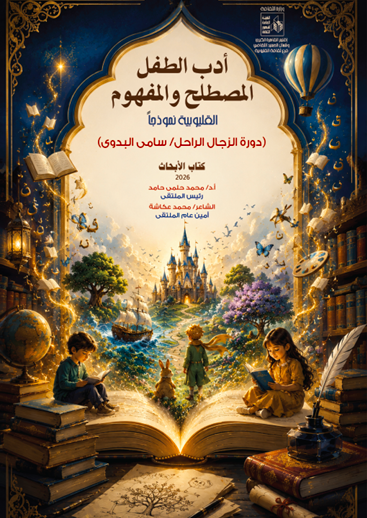
Following the tribute ceremony, the One-Day Literary Forum continued with its academic sessions, based on the research papers collected in a volume published especially for the occasion. The proceedings open with two introductory essays: the first by Professor Dr. Mohamed Helmy Hamed, President of the Forum, and the second by poet and novelist Mohamed Okasha, Secretary-General of the Forum. Both essays emphasize that children’s literature is no longer merely a category of writing for young readers, but has evolved into a comprehensive field of scholarship and creativity that calls for specialized critical studies and fresh perspectives capable of responding to today’s cultural and technological transformations while reexamining the fundamental terminology and concepts upon which this literary genre is founded.
The volume offers a broad intellectual panorama of children’s literature and children’s theatre, bringing together an outstanding selection of critical studies and academic research that examine creative writing for children and young adults from diverse literary, educational, and aesthetic perspectives.
It includes a collection of studies addressing both theoretical and practical issues in children’s literature. Among them is Dr. Ahmed Abdel Razek Abu El-Ela’s study on the critical standards for evaluating children’s theatre, using the works of Salah Jahin as a case study. Dr. Mohamed Ali Azab explores poetry written for children, examining its terminology, conceptual framework, and its aesthetic and educational objectives. Meanwhile, writer Ahmed Tawsoun investigates contemporary young adult fiction and the interaction between digital technology and fairy tales through the works of celebrated children’s author Yacoub El-Sharouny.
The volume also devotes considerable attention to contemporary Egyptian children’s theatre. Dr. Mohamed Gamal El-Din Amin analyzes the image of the hero in children’s theatrical texts, taking the works of Kawkab Sika and Abdo El-Zeraa as practical examples. Researcher Gaber Bassiouni contributes a critical reading of the poetry collection Here Is My Home by Dr. Mohamed Helmy Hamed, while Galal El-Sayyad examines Punctuation Sauce and Other Stories by Dr. Hanan Ismail.
The scope of the volume further expands to include educational values in children’s stories. Professor Dr. Omaima Mounir Gadi analyzes Soha and the Sunflower, while another study offers a critical reading of the novel The Guardian of the Great City by novelist Yasmine Abdel Rahman Thabet. Dr. Mohamed Abdel Gawad contributes a study on theatrical drama in Qalyubia Governorate, and poet and archaeologist Rasha El-Khatib explores the concept of childhood in Ancient Egypt.
In another section, the volume addresses issues of censorship and children’s theatre through a study by Professor Dr. Sayed Ali Ismail, alongside applied readings of selected theatrical works. It also examines the transformation of classic fairy tales in the digital age through two articles by Hossam Moussa, which reinterpret Little Red Riding Hood and Snow White within contemporary contexts shaped by social media and modern cultural activities.
The forum is organized by the General Administration of Public Culture, affiliated with the Central Administration for Cultural Affairs, in cooperation with the Greater Cairo and North Upper Egypt Cultural Region and the Qalyubia Culture Branch. Its sessions explore key intellectual and critical issues related to the concept of children’s literature, its educational and aesthetic dimensions, and its vital role in shaping the consciousness of future generations and contributing to the future of Egyptian culture.